How Do You Get Antioxidants and How Do You Know Its Enough
With the holiday season approaching, opportunities abound for food overindulgence and, later, all kinds of resolutions to consume more healthfully.
At that place are many reasons to retrieve nearly eating meliorate, but they do not all have to do with weight loss. Your nutrient choices can help reduce stress in your torso by reducing the number of free radicals in your cells.
While traditional holiday meals are laden with salt, fat and sugar, many foods we swallow regularly, such as sweets and sodas, tin besides spike blood glucose and insulin levels. They too, alas, tin increment the corporeality of free radicals, or molecules with unattached electrons, in the body, which can practise serious cellular impairment.
We hear a lot about antioxidants, and we are encouraged to eat foods that are rich in them. But what exactly are they, and why exercise nosotros demand them? As a researcher who examines cellular impairment, I volition explain the oxidative procedure and why it's of import to curb information technology. Free radicals - cellular bad guys - are produced during the oxidative process. Antioxidants piece of work to prevent some of the damage.
Electron shuffling
If a substance is "oxidized," information technology has lost electrons to some other substance. In contrast, we say a substance is "reduced" when it has gained electrons from another substance. Oxidizing agents are chosen electron acceptors, because they remove electrons from a substance, putting them in a land of loss, or oxidized. Oxidizing agents keep electrons for themselves.
The oxidizing agents that have accepted electrons become free radicals if the unpaired electrons don't bind to other molecules. These free radicals mess with our cellular metabolism, even interfering with our Dna.

Food metabolism and free radical formation
Our mitochondria, which operate similar little factories in our cells, are responsible for burning fuel from food and producing energy in each of our cells via a process called oxidative phosphorylation. This metabolic pathway is a cellular chain reaction that involves a serial of oxidation and reduction reactions in which atoms try to requite or receive plenty electrons to have a full "vanquish." Almost atoms take a matching number of protons and electrons, but this leaves the various "shells" of electrons incomplete, rendering them vulnerable to scavenge the body in search of electrons for pairing.
Ordinarily, when an electron separates from a molecule involved in oxidation and reduction, information technology reattaches most immediately to some other. But when they don't, gratis radicals form.
Under ordinary conditions, this oxidative procedure creates chemically reactive molecules containing oxygen. This in plough can pb to the production of molecules of free radicals that are unstable in high concentrations.
Not all free radicals are bad. Free radical germination is crucial to the process of oxidizing nutrients from our food into chemic energy.
Free radical accumulation, however, be it atoms, ions or molecules, is harmful and can have severe consequences on our health. These unstable molecules are detrimental to the proper structure and function of cells throughout the torso due to their power to oxidize cells, known every bit oxidative stress.
Free radicals damage the growth, development and survival of cells in the body. Their reactive nature allows them to engage in unnecessary side reactions causing cellular impairment and eventually injury when they are present in disproportionate amounts.
They directly impair jail cell membranes and DNA. This leads to cell mutation and causes new cells to abound erroneously, which ways gratis radicals are associated with both development of cancer as well every bit the progression of aging. Costless radicals are oftentimes implicated with wellness problems that are experienced with age, such as hardened arteries, diabetes and even wrinkle formation.
Antioxidant-rich foods all around us
Overeating farther increases free radical production. As we consume more, our mitochondria release more activated oxygen than normal during energy consumption, thus generating college levels of free radicals. And, risk of oxidative stress is greater when certain types of foods are consumed and the degree of danger can exist influenced past the manner in which they are prepared or cooked.
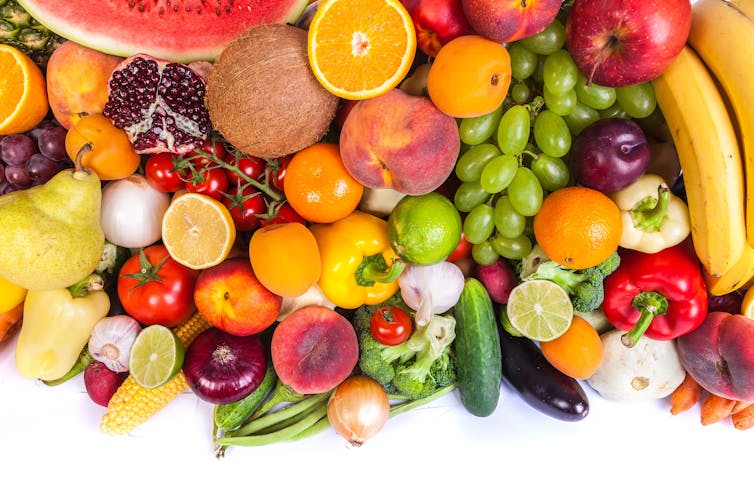
You can avoid sources of costless radicals past planning ahead and incorporating healthy foods in your everyday life, not but during the holidays merely twelvemonth-round. Keep in mind that gratuitous radical content is high in food-poor meals and those deficient of antioxidants.
1) Avert high glycemic foods, or foods that are rich in refined carbohydrates and sugars. They are more probable to generate gratis radicals.
2) Limit processed meats such as sausages, bacon and salami. They contain preservatives, which leads to the production of free radicals.
three) Limit carmine meat. It is particularly more than vulnerable to oxidation because of its high iron content.
iv) Don't reuse cooking fats and oils. Heating fats and oils during cooking oxidizes them, generating gratis radicals which seep into our foods.
5) Limit alcohol. Alcoholic drinks non only are high in calories only likewise tin produce free radicals in the trunk. Effort to limit your drinks to one or two per day.
half-dozen) Eat foods rich in antioxidants, chemicals that inhibit the oxidation of molecules past neutralizing free radicals, thereby stopping them from causing cellular damage. Antioxidants are establish in a variety of plants in the form of vitamins A, C and E, selenium and sure phytonutrients and polyphenols. Cranberries are loaded with them!
7) Await for foods with β-carotene, lycopene and lutein, including broccoli flowers, alfalfa sprouts, Brussels sprouts, carrots, collard greens, corn, mango and tomatoes. These foods can be incorporated into several side dishes such as vegetable medleys, casseroles and salads.
8) Consider fruit for dessert instead of rich pies and cakes. Apples, cantaloupe, cherries, grapefruit, kiwi, papaya, red grapes, blackberries, raspberries and strawberries are delightful on their ain or when mixed to create lovely fruit salads.
ix) Grab some nuts – always plentiful at the holidays – and other foods rich in vitamin Due east, such every bit sweet potatoes.
10) Constitute metabolites called flavonoids also demonstrate antioxidant functions. Some versatile antioxidant-rich flavonoids include onions, eggplant, lettuce, turnip greens, endives, pears, cherry wine, parsley, citrus fruits, berries, cherries, plums, legumes, soybeans, milk, cheese, tofu and miso.
11) Savour antioxidant superfoods, those with loftier levels of more than one vitamin. These are prunes, plums, raisins, blueberries, cranberries, figs, oranges, pomegranates, sweet red bell peppers, beets, kale, spinach and nighttime chocolate.
12) Endeavor herbal therapy - in your food! Many spices can not only enhance the flavor of our food but also reduce oxidative stress. These include ginger, grape seed excerpt, ginkgo, rosemary and turmeric.
13) Take time for tea. When the evening comes to an end, you tin revel in a gentle and soothing cup of warm green tea and be comforted in knowing that the polyphenols in your brew also gainsay oxidation.
Source: https://theconversation.com/13-ways-to-get-more-antioxidants-and-why-you-need-to-70035
0 Response to "How Do You Get Antioxidants and How Do You Know Its Enough"
Post a Comment