In Cohen's Book the Family What Is One Important Difference Between Ethnicity and Race?
In this interview, sociologist Philip N. Cohen discusses his work on developing open platforms for social science research and his research on family inequality.
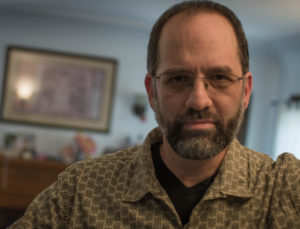 Philip N. Cohen is a professor of sociology at the University of Maryland and researches the sociology of families, census, social inequality, and scholarly communication. He is besides the director of SocArXiv, an open annal of the social sciences. Here he spoke with us about his work on open science frameworks and his research on family inequality.
Your blog features your involvement in open science . Most recently you wrote a weblog post about Sci-Hub , which is a clearinghouse for pirated scientific articles that are backside the paywalls of journals. You note in your post that you lot use the service, but don't "contribute annihilation to the system." Instead, you just "free-ride off their misdeed." How do paywalls for scientific research exacerbate inequality in admission to information?
The affair about putting information behind paywalls is you lot're denying access to people who aren't subscribers. You're as well raising the money that yous need to practice the publication work. So selling published work has always been a way of financing the work, just similar authors sell books and so on. The problem with science specifically, and I include social science in that, is it really requires openness and transparency to work equally science. So in the onetime days it was really expensive and difficult to impress and distribute scientific literature or literature of any kind. And so we had journals and they had to raise coin to bind and ship their journals to libraries. Everything was a lot slower.
Now, we can do information technology a lot faster and we can open the process upwards to people who can't afford to pay. And, we can do that very cheaply. But we're still sort of tied down in this old sort of 19th century system of publishing that involves paying subscriptions for journals when we could reduce the costs a lot, publish a lot faster, and more than openly and more inclusively. That would besides improve the quality of scientific discipline past getting more feedback, getting more interaction, opening ourselves upwardly to scrutiny to find errors and fix things, and yeah, make information technology better.
Y'all are the director of SocArXiv , which is an annal of primarily social scientific discipline papers on the Open Scientific discipline Framework platform. The Stone Center is participating in the annal with our new working paper serial on inequality. Can you talk a little bit near the origins of the archive and where is information technology going?
Before there was SocArXiv, in that location was ArXiv, which was for math and physics and is a couple of decades old. Information technology takes a long time to publish papers in math and physics. The peer review process is very irksome and the publication process is very slow, and they just didn't want to expect that long to besides have everything distributed with paywalls. So they came up with a preprint organisation of distributing papers earlier peer review. And it was very successful. The interesting matter virtually it is, it did not kill the journal system. They still have peer review, and you yet accept to publish in journals to get fancy jobs and tenure and stuff like that. Merely, in the meantime, everybody can read the piece of work.
It became normalized in those disciplines to share piece of work earlier for free equally the work developed. So we came up with SocArXiv for social science. Nosotros're mostly sociologists and librarians who did it. We do desire to be confusing and claiming the publishing system, but we don't believe we tin can simply replace it with this. So what we've washed is basically added a step in the publishing process where yous write the paper, yous have a typhoon, you lot share it, and then you tin can also keep and publish it in journals. Only in the meantime, it's faster, cheaper, and costless for readers.
We think at that place are other parts to democratizing and opening scholarship that we desire to practise. I'thousand including the peer review procedure. The peer review process could be more open. We could imagine a globe where reviews are themselves scholarly contributions, where people tin read reviews, where reviewers are accountable, where editorial decisions are accountable in a more substantive way. We're also thinking nigh ways that we might end upwards breaking down the barriers between types of work where there'due south this very rigid thing calleda newspaper, which has a moment when information technology'due south done. We think that with the technology and communications nosotros have now, you can accept an evolving stream of research with feedback from different actors at unlike points. It can be split up off into split up projects with dissimilar collaborators.
Your weblog is prolific. It is primarily on family inequality — your area of expertise — and you lot're producing a off-white number of charts to go with your analysis, such as your " 11 Trends for Your New Decade's Holiday Party " or your analysis of the New York Times essay, "The Coming Stop to Babies." How does your blog assistance bulldoze the conversation around family unit and inequality?
The peachy thing nearly the blog, specially as it developed and I got more readers, is information technology increased the research metabolism a lot. And then I can get work out at an earlier stage and get more feedback. It'south also part of what preprints and SocArXiv is almost — getting work out earlier instead of going through all the gatekeepers of peer review, periodical publication, or a book publication, which is even slower. I can do more than one-half-broiled ideas and work and put them out and go responses from people who are interested in the things I'one thousand interested in. And so it'south been great for, "Hey, what do yous all recall well-nigh this?"
When it comes to preliminary results or minor findings, similar here's the nautical chart of just one trend, it's a place to put them and attract the attention of people who are interested in that specific thing. It links up with Twitter and other social media so it becomes a hub for my engagement with all kinds of other readers and researchers.
Your recently updated book, The Family: Diversity, Inequality, and Social Change , addresses many trends in gimmicky family unit life, including how growing inequality challenges families in areas such as health, wealth, and well-being. When it comes to families and inequality, what should we be paying attention to?
I recollect there's some questions we're used to thinking about with inequality like rich people accept rich children, parents with high paying jobs become their kids jobs. Poverty may compound intergenerationally through things like wealth, access to pedagogy, neighborhoods, race and racism.
In the family realm specifically, I like to aggrandize those, especially to await at who gets a family unit and who gets the family unit they want: If you want to get married, tin can you find a spouse? If you want to have a stable family, do you lot have the resources to protect your family from economic shocks, from unemployment, from housing discrimination, healthcare, and so on. So, I similar to think of family unit as an inequality outcome also. If you lot look at kids in the foster care system, they don't get to live with their biological parents. And so they're disadvantaged in that sense in terms of family as an outcome. They may end up in another better situation, just that'south one of the things we expect at, is who gets to have the family that they want. This is also large with same sex marriage. Tin can you ally? Or interracial marriage, tin can you legally marry the person yous want to ally or is the law preventing you, literally making it illegal for y'all to take the family that yous want?
Is anything else top of mind that yous want to share on family trends and equality, open science, even politics?
Y'all know nosotros've had a huge increase in involvement in inequality, basically since the Swell Recession, and Occupy, and the 1 percent and all that. There'southward new information. There'due south new methods. There'south groovy new interdisciplinary collaborations actually beingness driven by public interest in an exciting way. There are huge blind spots in that. Nosotros accept a massive conversation almost social class inequality that often substitutes for or pushes out race in bad-mannered ways. We take politics and policy questions which are non well-defined. You know, we're going to take a wealth tax. Nosotros're going to raise income tax rates. Or are we going to slash income revenue enhancement rates? It'south very much up in the air. So information technology'due south an exciting expanse and I'm really looking forrard to this stuff that you lot all [distribute] in your series.
Source: https://stonecenter.gc.cuny.edu/lowering-barriers-to-science-collaboration-a-discussion-with-philip-cohen/
0 Response to "In Cohen's Book the Family What Is One Important Difference Between Ethnicity and Race?"
Post a Comment